
Dental Implants – Little Ferry, NJ
Restore Your Healthy, Beautiful Smile with Dental Implants
If you’re missing one or more permanent teeth, there’s no need to deal with the hassle of temporary solutions like dentures or dental bridges. Dental implants are the only permanent tooth loss solution. These incredibly durable, lifelike restorations can restore not just the appearance, but also the function of your missing teeth and with proper care could even last a lifetime!
Why Choose Erin Dental for Dental Implants?
- Partners With Local Specialists
- Durable, Lifelike Restorations Used
- Dental Insurance Welcome & Flexible Financing Available
What Are Dental Implants?
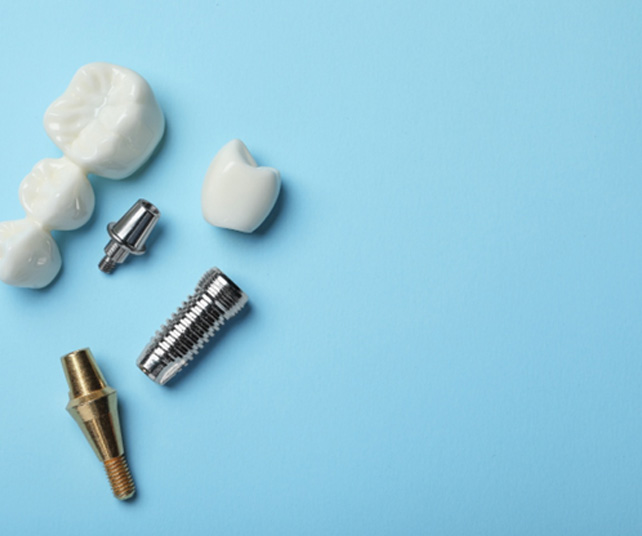
Dental implants are prosthetic teeth that permanently secure to the jawbone for a more stable restoration. There are three main parts to your dental implant: the implant post, the abutment (which connects the post to the restoration), and the restoration (available as a single tooth, bridge, or denture).
To get dental crowns, a surgeon will numb your mouth and make an incision in the gums. Then, the dental implant post will be permanently secured into your jawbone and covered with a protective cap. Over the next three to six months, the implant will fuse with the bone through a process known as osseointegration. Once osseointegration is complete, you will return for another minor procedure to have your abutments placed, and in just a few short weeks, your final restoration will be ready to attach.
The 4 Step Dental Implant Process
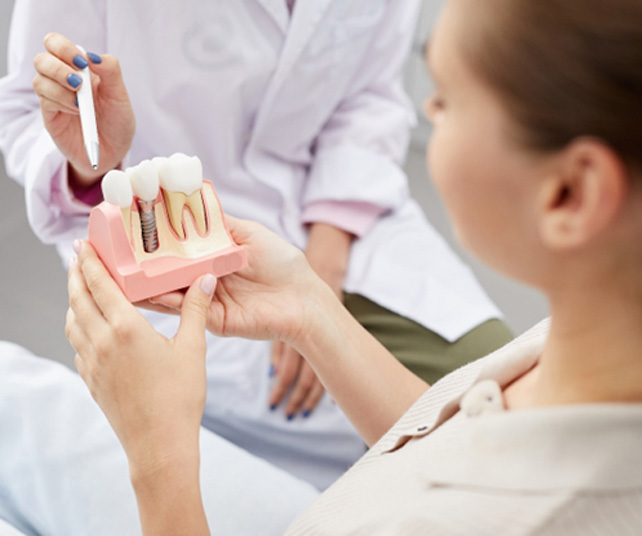
Dental implant treatment can be done in four general steps. These include:
- Initial Consultation: At this appointment, Dr. Peters will take images and impressions of your mouth and examine the condition of your oral health. She will then make recommendations for any necessary preliminary treatments. If required these must be completed before dental implant treatment can proceed. We will also provide you with a cost estimate and provide referrals to our local surgical partner.
- Dental Implant Surgery: Peters works with local dental implant specialists for this portion of treatment. You will coordinate details of your procedure with this specialist, including the time and date of surgery. Once your surgery is complete, your implants will receive protective caps to keep your mouth safe and allow them to heal over the next few months.
- Dental Implant Osseointegration/Abutment: For three to six months following your dental implant surgery, your dental implant must fuse with your jawbone via a process called osseointegration. This is essential for the success of your newly restored smile. Once complete, you will return to have your implant abutments placed. This is how your new teeth will connect to the implant. This procedure is minor and should take just a few weeks to heal from.
- Delivery of Dental Implant Restoration(s): Once your mouth has healed from your abutment surgery, you will return to our office to have your final restoration(s) placed. This may be in the form of a single crowns, a dental bridge, or an implant denture. This procedure requires no downtime, and you should be able to immediately use and show off your new smile as soon as you leave the office!
The Benefits of Dental Implants

Most patients prefer dental implants to more traditional restorations like dental crowns and dentures because they are the only permanent tooth loss solution available today. That means you won’t need to replace them every five to ten years, nor will you need to invest in special products to care for them like you do with dentures and dental bridges. Furthermore, unlike dentures, because your dental implants are securely attached to the jawbone, you won’t need to worry about them slipping or coming loose or causing painful denture sores due to a changing fit.
Who Dental Implants Can Help
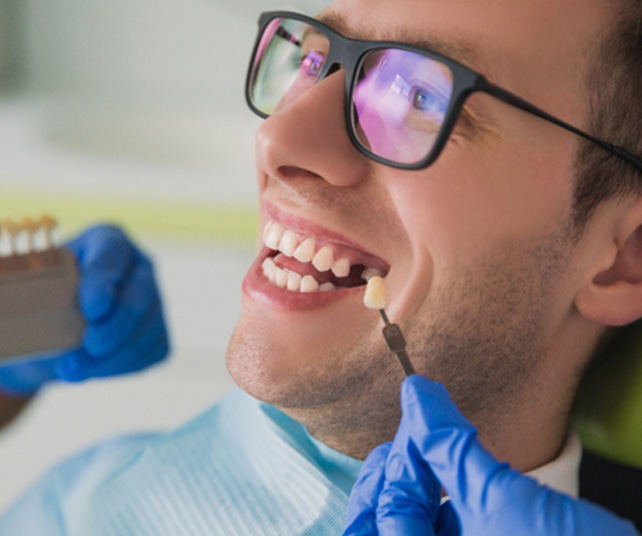
Whether you’re missing one tooth, just a few, or all of them, dental implants can help. However, to qualify for treatment, you’ll need to have a healthy mouth. Dr. Peters will review your oral health at your consultation, and if you’re not a good candidate initially, it may be possible to become one with treatments like gum disease therapy or bone grafting.
Once your mouth is in good condition, we can plan the type of implant you need depending on how many teeth you’d like to replace.
Missing a Single Tooth
Single tooth dental implants are secured to a single implant post inserted directly into the jaw. They offer a variety of benefits over dental bridges, including a permanent secure hold, no need to be replaced every five to ten years, and important jawbone stimulation that could prevent further tooth loss later.
Missing Multiple Teeth
While traditional dental bridges can replace multiple consecutive teeth at once, they require those teeth to be surrounded by healthy abutment teeth to anchor to. With implant bridges, your prosthetics stay in place with a series of dental implant posts that are permanently attached to the jawbone, so they don’t require you to alter healthy teeth to work.
Missing All Teeth
Although traditional dentures can easily replace an entire arch of teeth in one prosthetic, they are notorious for slipping, changing shape, and causing painful mouth sores. Implant dentures permanently attach to the jawbone via several posts, restoring an entire arch just like traditional dentures. However, because they are permanently attached, they won’t slip or change shape, and they don’t need to be removed to soak or clean, making them much easier to care for than traditional dentures.
Learn More About All-on-4 Dental Implants
Understanding the Cost of Dental Implants

Because each smile is unique, each dental implant treatment will look different too. The cost of dental implants will vary depending on a variety of factors, including the location of their placement along the arch, the type of implant post, abutment, and restoration, and even the type of anesthesia or sedation you choose with your surgeon.
Ultimately, however, when considering the cost of your dental implants, it is important to consider more than just the final price of your procedure: dental implants are an incredible investment in your oral and overall health that with proper care could last you a lifetime!